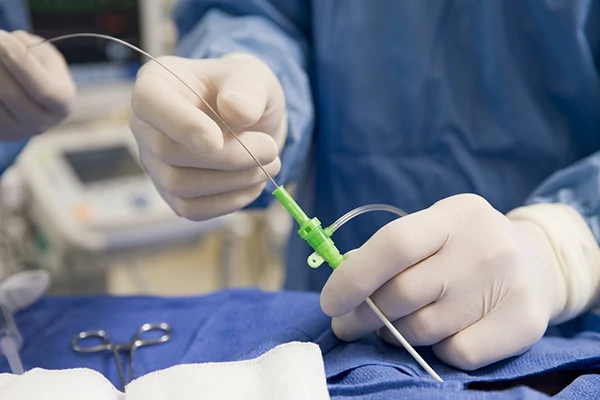
Interventional Cardiology & Electrophysiology

Precision-guided cardiac intervention for coronary, structural, and rhythm disorders. Minimally invasive. Outcome-focused. Expert-led.

Get Expert Consultation


    Advancing Heart Care Beyond Surgery

    Advances in interventional cardiology have transformed the treatment of heart disease, allowing many cardiac conditions to be managed through minimally invasive procedures with faster recovery and reduced risk. From coronary angiography and angioplasty to the management of complex rhythm disorders, care is guided by precision imaging, timely decision-making, and multidisciplinary collaboration.

    Electrophysiology services address abnormalities of the heart’s rhythm through specialised evaluation and advanced interventions, helping restore stability and improve quality of life for patients experiencing arrhythmias.

    Are You Experiencing Any of These Symptoms?

    If you are experiencing any of these, consult a cardiac specialist early. Early evaluation can make all the difference.
    Chest pain or discomfort
    Breathlessness during routine activity
    Fast or irregular heartbeat
    Dizziness or fainting spells
    Sudden fatigue or weakness
    Swelling in legs or feet

    Conditions We Help Manage, Prevent and Treat.

    Coronary Artery Disease (CAD)

    Neque porro quisquam est qui dolorem ipsum quia dolor sit amet, consectetur, adipisci velit

    1
    Coronary Artery Disease (CAD)
    2
    Ventricular Tachycardia (VT)
    3
    Chronic Total Occlusions (CTO)
    4
    Heart Valve Disorders
    5
    Supraventricular Tachycardia (SVT)
    6
    Acute Myocardial Infarction (Heart Attack)
    7
    Atrial Fibrillation and Arrhythmias

    Precision Interventions for Complex Cardiac Conditions

    Minimally invasive, imaging-guided procedures designed to treat a wide range of cardiac conditions with reduced risk, faster recovery, and improved outcomes.

    Interventional Procedures:

    • Diagnostic Coronary Angiography
    • Coronary Angioplasty and Stenting
    • Primary PCI for Heart Attacks
    • Complex and High-Risk PCI including CTO Interventions
    • Atherectomy and Intravascular Lithotripsy
    • Physiology-Guided Interventions (IVUS, OCT, FFR, iFR)

    Diagnostic Coronary Angiography

    An imaging procedure that uses contrast dye and X-rays to visualise the coronary arteries, helping identify blockages, narrowing, or other abnormalities to guide treatment decisions. It is often the first step in evaluating the need for further intervention.

    • Real-time visualisation of coronary anatomy
    • Guides decision-making for angioplasty, stenting, or surgery
    • Performed in a state-of-the-art cath lab environment

    Coronary Angioplasty and Stenting

    A minimally invasive procedure to open blocked or narrowed coronary arteries using a balloon catheter, often followed by placement of a stent to keep the artery open and restore blood flow. It is one of the most commonly performed cardiac interventions worldwide.

    • Restores blood flow without open heart surgery
    • Shorter hospital stay and faster recovery
    • Advanced imaging-guided precision

    Primary PCI for Heart Attacks

    An emergency procedure to reopen a blocked coronary artery during a heart attack, restoring blood flow to the heart muscle in the shortest possible time. Speed of intervention directly impacts survival and long-term heart function.

    • Gold standard treatment for acute heart attacks
    • Rapid door-to-balloon response through Heartline
    • 24x7 cath lab readiness

    Complex and High-Risk PCI including CTO Interventions

    Advanced interventional techniques for treating severely blocked or completely occluded coronary arteries in high-risk patients, often requiring specialised expertise and imaging guidance. These cases demand a high degree of procedural skill and multidisciplinary planning.

    • Management of multi-vessel coronary artery disease
    • Specialised techniques for chronic total occlusions
    • Imaging-guided precision for high-risk cases

    Atherectomy and Intravascular Lithotripsy

    Specialised procedures to treat heavily calcified coronary lesions, using rotational cutting or shockwave technology to prepare the artery for stenting. These techniques expand treatment possibilities for patients with otherwise difficult-to-treat blockages.

    • Advanced lesion preparation for complex blockages
    • Enables stenting in otherwise untreatable calcified arteries
    • Improved procedural outcomes and long-term results

    Physiology-Guided Interventions (IVUS, OCT, FFR, iFR)

    Advanced intravascular imaging and pressure measurement tools that help determine the severity of a blockage and guide precise, evidence-based treatment decisions. This approach ensures that only clinically necessary interventions are performed.

    • Real-time assessment of blockage severity
    • Reduces unnecessary interventions
    • Ensures imaging-perfect outcomes

    Electrophysiology Procedures:

    • 3D Electro-anatomical Mapping
    • Radiofrequency Catheter Ablation (AFib, SVT, VT)
    • Pacemaker Implantation
    • AICD (Automated Implantable Cardioverter Defibrillator)
    • CRT (Cardiac Resynchronisation Therapy)
    • Long-term Remote Rhythm Monitoring and Device Management

    3D Electro-anatomical Mapping

    High-definition mapping of the heart’s electrical system to pinpoint the origin of complex arrhythmias, enabling targeted and accurate treatment. It provides a detailed three-dimensional view of the heart’s electrical activity in real time.

    • Precise localisation of rhythm abnormalities
    • Guides ablation therapy with accuracy
    • Reduces procedure time and improves success rates

    Radiofrequency Catheter Ablation (AFib, SVT, VT)

    A minimally invasive procedure using heat energy to carefully target and neutralise small areas of heart tissue causing irregular rhythms, restoring normal heart function. For many patients, it offers a long-term alternative to lifelong medication.

    • Effective treatment for AFib, SVT, and VT
    • Minimally invasive with faster recovery
    • Reduces dependence on long-term medication

    Pacemaker Implantation

    A small device placed under the skin to regulate slow or irregular heartbeats, ensuring the heart maintains a steady and reliable rhythm. It is a well-established, safe procedure with proven long-term outcomes.

    • Restores and maintains a stable heart rhythm
    • Minimally invasive implantation procedure
    • Long-term device management and follow-up

    AICD (Automated Implantable Cardioverter Defibrillator)

    A device implanted to continuously monitor heart rhythm and deliver life-saving electrical shocks when dangerous arrhythmias are detected. It serves as a constant safeguard for patients at risk of sudden cardiac arrest.

    • Continuous rhythm monitoring and protection
    • Life-saving intervention for sudden cardiac arrest risk
    • Remote monitoring capability for ongoing safety

    CRT (Cardiac Resynchronisation Therapy)

    A specialised pacing device that coordinates the contractions of the heart’s chambers, improving pumping efficiency in patients with heart failure. It is particularly effective for patients whose heart chambers are not beating in sync.

    • Improves heart function in heart failure patients
    • Coordinates chamber contractions for better output
    • Can be combined with defibrillator function (CRT-D)

    Long-term Remote Rhythm Monitoring and Device Management

    Continuous remote surveillance of implanted cardiac devices, enabling early detection of rhythm abnormalities and timely clinical intervention without requiring hospital visits. It provides patients with ongoing specialist oversight from the comfort of their home.

    • Remote device checks without hospital visits
    • Early detection of rhythm changes
    • Ongoing specialist oversight and device optimisation

    Cardiac Transplantation

    Heart Transplant Evaluation and Management

    Comprehensive assessment and preparation of patients for cardiac transplantation, including long-term follow-up care.

    • Structured transplant eligibility evaluation
    • Multidisciplinary coordination
    • Lifelong post-transplant monitoring

    Frequently Asked Questions

    Quick answers to help you understand our care, services, and how to reach us.
    • A coronary angiogram is a test used to look for narrowing or blockages in the coronary arteries. It is done by inserting a thin catheter through an artery, usually in the wrist, groin, or sometimes the neck, guiding it to the heart, and injecting contrast dye so the arteries can be seen clearly on X-ray images.

    Need Guidance on your
    Heart Condition?

    Our Cardiac Specialists are here to help. Book a consultation today.